Bonds Mill Stonehouse Gloucestershire GL10 3RF

Data as a Strategic Weapon: How Quality Data Management Drives Defence Capability


4–6 minutes
Modern warfare is won in data before battlefields.
This isn’t hyperbole. It’s the lesson of recent conflicts and the driving force behind billions in UK defence investment – from the UK Ministry of Defence’s £320 million DEEAMS programme to the Strategic Defence Review’s Hybrid Navy initiative.
For over 65 years, Allan Webb Ltd has supported the UK defence sector through technological transitions. Today, we’re witnessing perhaps the most significant shift: from hardware-centric capability to data-driven operational advantage.
This article explores how defence data quality has become the decisive factor in modern defence operations, what UK programmes are doing about it, and what this means for defence contractors and suppliers.
KEY TAKEAWAYS
- Data quality now determines military outcomes more than hardware superiority
- UK investing £320M in DEEAMS to consolidate 17 fragmented legacy systems
- Historical examples prove data integration saves lives (Atlantic) and poor data loses wars (Ukraine)
- Real “Dreadnought moment” is data integration, not autonomous platforms
- Supply chain data quality critical – poor supplier data undermines entire programmes
Data as a Strategic Amplifier
Think of data as a two-way effector. It amplifies your capability when managed well, but degrades it when neglected.
When commanders have accurate, timely information, they maintain asset availability, optimise logistics, and respond decisively to threats. When data is wrong, missing, or fragmented, it creates cascading failures: delayed decisions, wasted resources and, most critically, conceals problems that only surface when it’s too late.
While larger ships, faster jets, and heavier armour remain relevant, they’re no longer sufficient alone. Today, virtually all military equipment generates continuous streams of data including location, operational status, maintenance requirements, and threat detection. The force that can transform this information into rapid, precise decisions holds the decisive advantage. Those unable to adapt fight blind, regardless of their hardware superiority.
As the UK MOD states: without good data you will get no digital advantage, no decision advantage, no operational advantage and no benefits from advanced AI Tools.
Real-World Consequences: From the Atlantic to Ukraine
Historical precedent is clear: data quality can help or hinder operations depending on precisely how it’s managed.

During WWII and the Battle of the Atlantic, Allied forces combined the decrypted German naval communications, via Enigma machines at Bletchley Park, with centralised convoy tracking. This data integration enabled real-time rerouting of merchant vessels away from U-boat patrol lines, directly contributing to Allied victory in the Atlantic campaign. Quality data, shared across trusted networks, saved thousands of lives.
Conversely, Russia’s 2022 invasion of Ukraine demonstrates the consequences of data failure. Defence analysts and subsequent reporting have revealed systematic logistics breakdowns: vehicles abandoned due to lack of fuel, or equipment failures stemming from inadequate spare parts or maintenance logs. The initial offensive faltered not from insufficient firepower, but from fundamental data and logistics management failures – precisely the vulnerabilities that quality information systems are designed to prevent.

The UK’s Defence Data Quality Initiatives to Combat This Challenge
A number of the UK’s big defence programmes are shaped by this thinking. The UK MOD’s maintenance engineering asset management system, DEEAMS, at a cost of £320 million will replace approximately 17 independent legacy systems with one shared platform used by over 65,000 personnel across the defence enterprise, managing data for 130-plus asset platforms. Its goal is to provide commanders and engineers with insight about what’s available for deployment, what’s in stock and where it all is, in real-time.
| DEEAMS BY THE NUMBERS |
|---|
| £320m Investment |
| 17 Legacy Systems replaced |
| 65,000 users across Defence |
| 130+ Asset Platforms managed |
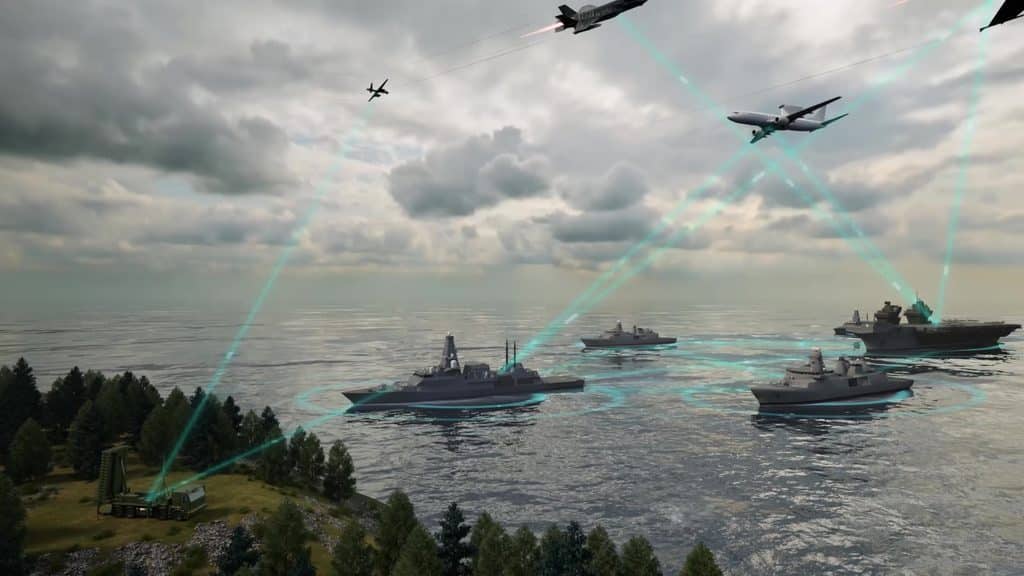
One of the key aspects of the Strategic Defence Review, the Hybrid Navy, is defined by a combination of crewed ships, uncrewed vessels and autonomous ships. This will only work if the information from every sensor, drone and ship can be collected, trusted and acted on quickly, even under difficult communications. There are initiatives, such as the Digital Backbone and NEXUS, to help facilitate this.

A ‘Dreadnought Moment’ for Industry
The Defence sector frequently discusses the next ‘Dreadnought Moment’: a technological leap that renders all previous generations obsolete almost overnight, as HMS Dreadnought did to every single battleship in 1906. Current conversations focus on drones and autonomous systems as the modern equivalent.
However, this misses the point. Uncrewed platforms are simply additional sensors and effectors that generate more data, not less, than the platforms they replace.
The authentic ‘Dreadnought Moment’ isn’t the hardware itself, but the ability to combine, trust and act on data from all sources, crewed and uncrewed, faster than an adversary can.
Initiatives, like a hybrid fleet, built on questionable data discipline, aren’t more capable than a smaller, better-connected fleet; they’re simply a louder source of noise. The strategic advantage belongs to whoever harnesses the power of their data first, not the one that deploys the most hardware.
The Importance of Supply Chains and Logistics
State investment alone cannot deliver this transformation. Most equipment data originates from industry: equipment manufacturers, maintenance contractors, and personnel on the ground.
When state of the art systems inherit poorly documented, inconsistent, or improperly transmitted data, they replicate the failures of their predecessors regardless of their technological sophistication.
Suppliers who provide accurate, structured data in common formats strengthen the entire ecosystem. Those who treat data as an afterthought risk becoming the weak link and jeopardising the entire enterprise.
Concluding Thoughts
History’s lesson is clear: data, when it’s cleansed, well managed, precisely available, and in the right place, is the weapon.
Today, the defence industry is at an inflection point. Those who treat data as a strategic asset, not an administrative burden, will define the next generation of capability. The question isn’t whether to invest in data discipline, but whether you can afford not to.
Allan Webb Ltd has spent over 65 years helping defence organisations navigate technological transitions and transform complex data challenges into strategic advantages.
If you’re facing data quality challenges in defence programmes, we’d welcome a conversation.
About This Article
This article was prepared by the Allan Webb Ltd team, drawing on over 65 years of experience supporting UK defence programmes in data management, asset supportability, and through-life engineering.
For more insights on defence data and digital transformation: